JOURNAL
Looking East: Home, Fabric, and the Subtleties of Craft with Sarah Chehab
Written by Nigora and Valerie
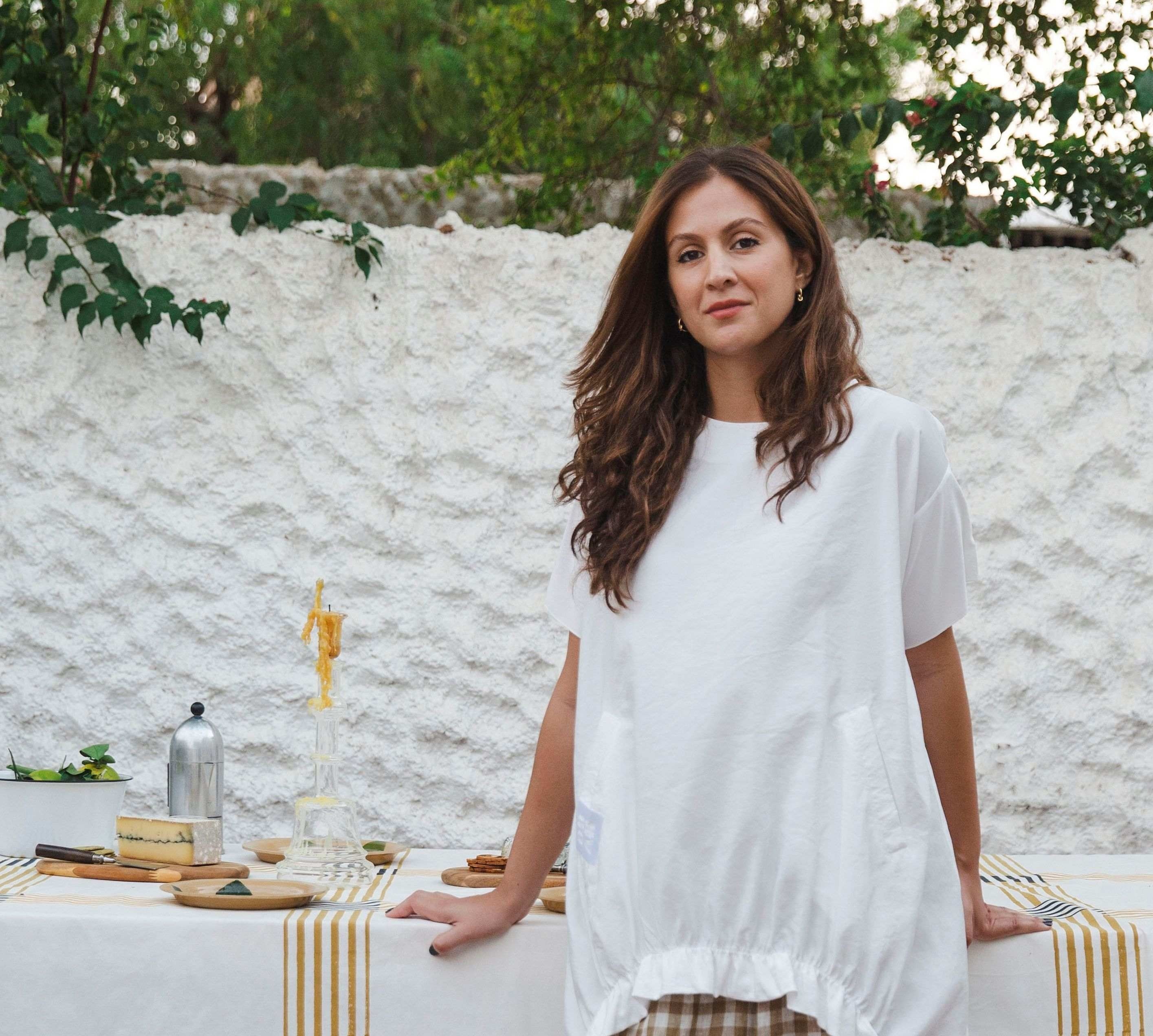
Looking East
Sarah steps out of frame for a moment and returns with a piece of cream-coloured fabric in her hands. Intricate golden stitches shimmer through the screen, embroidered into the cloth with a patience that must feel foreign to contemporary time. Sarah is holding her grandmother’s bridal wrap, carried from home to home, from generation to generation.
“My uncle once said: 'This is only the packaging. Can you imagine how good the stuff inside must be?'" Sarah recalls. It was a telling insight, coming from someone outside the design world.
It is a realisation that would later shape Nid, the brand she founded to explore the relationship between home, heritage, and contemporary life: craft could be portable, intimate, fragile yet enduring all at once.
Sarah grew up in Saudi Arabia’s Lebanese diaspora, navigating a sense of belonging to her country of origin that was never straightforward. “It’s complicated,” she says. “It’s a relationship with something you love deeply, but that also hurts you. The minute you open up, you go into defence mode.”
Home, for Sarah, is not a fixed geography, but a constellation of people, places, materials, and gestures. “Nid is about building a home in several places,” she explains. “It blurs the boundary of where you’re from.” Even the name itself (“nid,” is French for nest) points toward something both fragile and intentional. A place you assemble piece by piece, even if you never stay in one place for long.
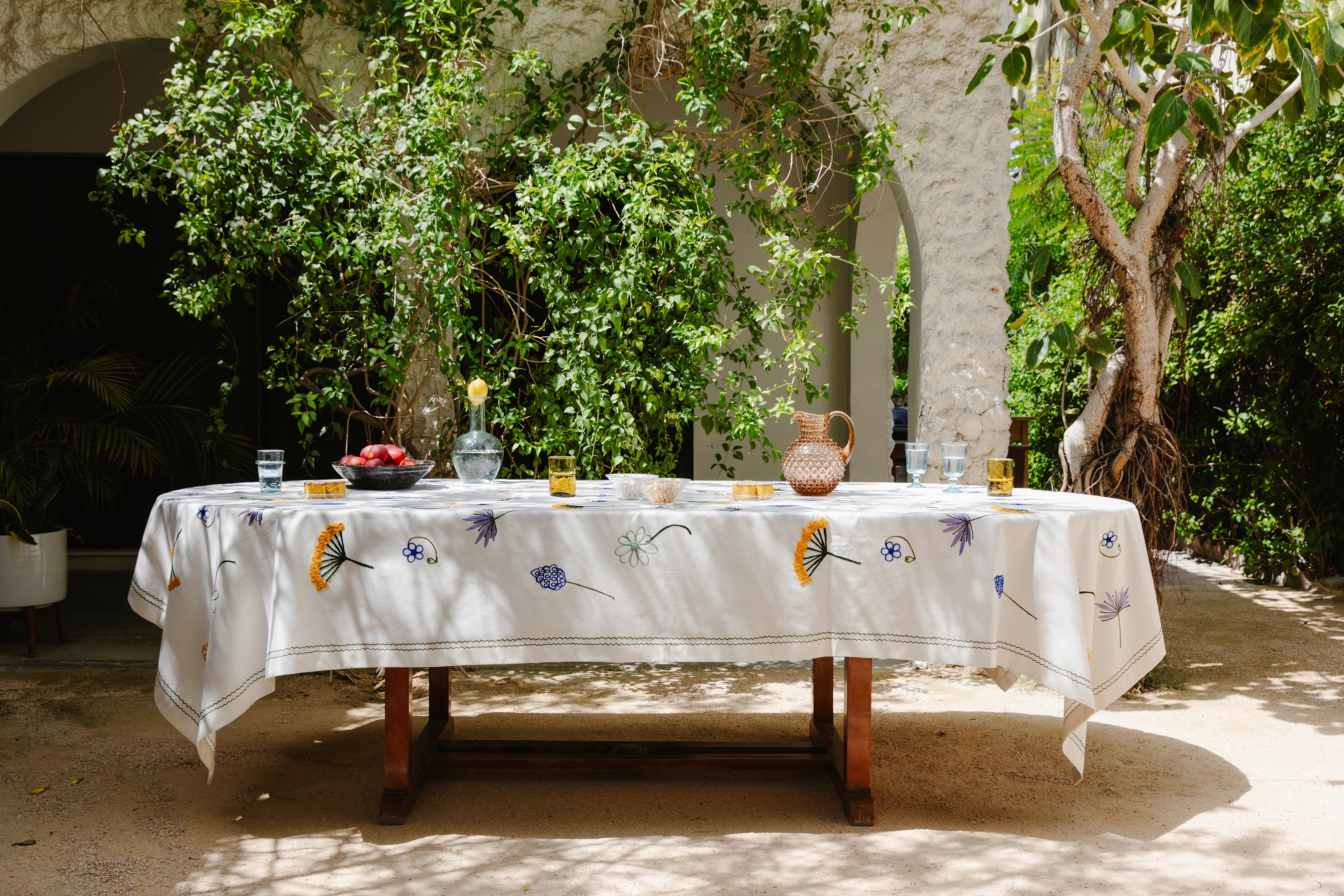
Fabric has been present in Sarah’s life since before Nid became a part of her creative practice. Growing up, she remembers being surrounded by textiles brought back and forth across borders. Objects light enough to travel, and meaningful enough to keep. Fabric, she realised, had a unique quality: it could be folded, packed, and carried. A home, made portable.
For Sarah, that versatility is precisely what makes fabric powerful. It carries memory without monumentality, labour without spectacle. Nid’s earliest pieces naturally emerged from this logic. Home objects grounded in textiles, rooted in Lebanon but always intended to reach across other crafts and geographies.
Sarah studied graphic design, later working between Beirut and London, but her understanding of aesthetics was shaped long before her formal education. She recalls her mother wearing Comme des Garçons and Yohji Yamamoto as a subtle rebellion in a culture with rigid expectations of what a woman should look like.
“That was her way of standing out,” Chehab says. “Of refusing a certain image.”
This refusal of fixed forms and frozen heritage sits at the heart of Nid. Sarah is interested in the evolution of craftsmanship and keeping it relevant to our times. Her concern is not preservation as nostalgia, but as living practice. Too often, craft becomes reduced to souvenir — recognisable, replicable, void of risk or character. Nid instead treats heritage as something that can be questioned, stretched, and reinterpreted.
Today, Nid works with artisans in Lebanon and beyond, from NGOs in Lebanon and India to artisan studios founded by Syrian women who left their homes during the war and rebuilt their practices elsewhere. The collaborations are slow, relational, and rarely linear.
“I might design something on my laptop, but when you hold the prototype in your hand, you realize it is over designed,” Sarah notes. “You need to keep in mind that what you draw is only a blueprint. Once it takes shape through the human hand, through the craft, you realize that not all of the design elements are needed.”
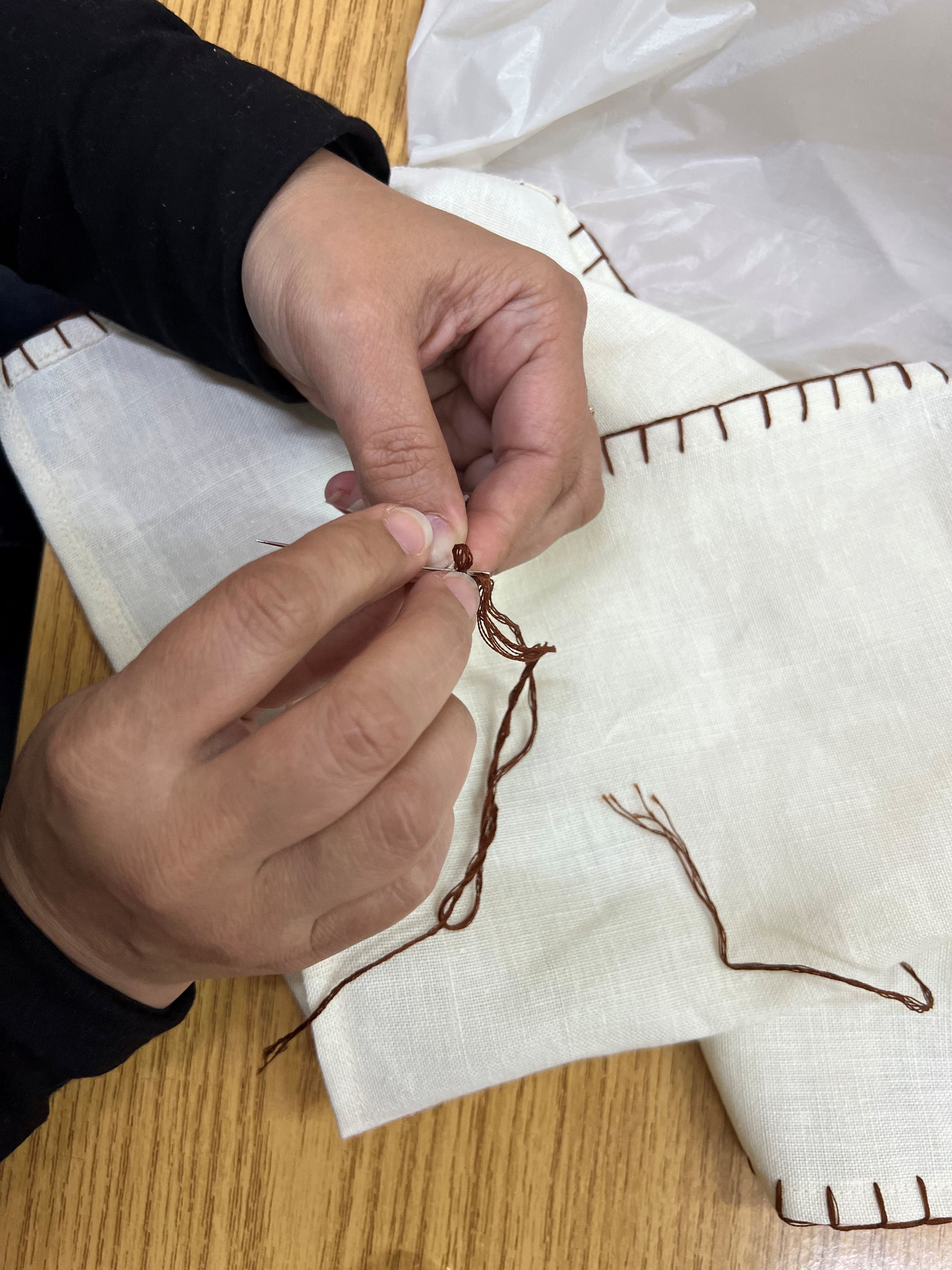
Some pieces take years to arrive at their final form. Others appear almost accidentally. There is no single process and no expectation of perfection. “Someone might be daydreaming and miss a pattern in a flower,” she says. “That’s the glitch. That’s the human element.”
It is also, she believes, something no machine can replicate. Techniques like sashiko in Japan or kantha in India (practices of repairing, layering, embellishing old fabrics) are rooted in care, intuition, and necessity. These are precisely the qualities that give human craft its soul.
Still, the realities of ethical production are not as romantic. High costs sometimes result in certain designs being abandoned, while places of production must be chosen carefully. “You need an eye for what sells and what doesn’t,” Sarah concludes. “And sometimes, you have to make people a little uncomfortable.”
She is candid about still learning to balance commercial survival with integrity. Craft, she notes, allows for a flexibility that factories do not: smaller quantities, slower timelines, products that evolve, even after launch. “The minute you release something doesn’t mean it’s finished,” she says. “You’re constantly revising.”
When asked about the future, Sarah, who is now based in Dubai with her husband and two sons, speaks less in timelines and more in directions. There is a utopic vision of further production in Lebanon and the region that she holds gently, but without certainty. For now, her curiosity pulls her eastward.
To India, for its vast networks of skill and workshop structures. To Uzbekistan, for its history and the vivid images that continue to surface. To Japan, for its refined balance between past and future.
Her grandmother’s bridal wrap is folded away again. “There's so much to learn from looking East," she says. "That's where my curiosity lives right now.”
The call ends, and somewhere between the mountains of Lebanon, Dubai, and elsewhere still undefined, Nid continues to take shape. Stitch by stitch, wherever care and craft are allowed to meet.